Collaborative Post
Progressive lenses, also called multifocal lenses, are eyeglasses that have multiple prescriptions in a single lens. They correct distant, intermediate, and near vision zones. Single vision lenses, on the other hand, only have one vision zone, which most of us wear and provide correction for a single vision zone.
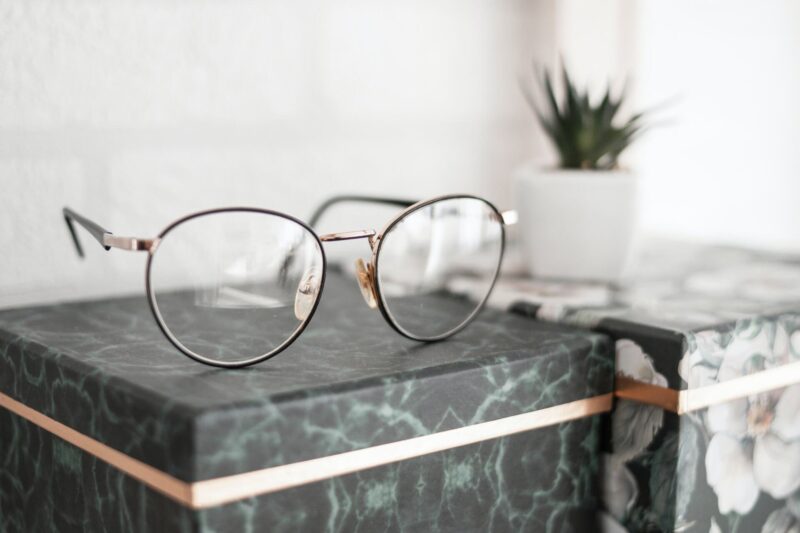
Single vision lens
If you need glasses only for a single vision correction, your optometrist will prescribe a pair of single vision glasses for you. For example, you need to wear glasses only for driving or reading. It is possible to get the same day prescription glasses near me without having to wait, and you are off to a good start.
Single vision lenses correct any one of the single vision problems, such as farsightedness, nearsightedness, or astigmatism. You can use single-vision glasses all day long. They will help you see clearly, whether for close reading or for distance, and can reduce eyestrain.
Styles and forms
The vision correction in a pair of single-vision glasses is the same throughout the lens. Single vision glasses come in full frame and half frame. Full frame glasses have uniform magnification and are the commonly used single lens. You can also use half-frame glasses for easier reading. They come in smaller frames and sit on your nose.
The forms of single vision glasses are Plano, Concave, and Convex. Plano lenses have the same consistent thickness throughout and are available in retail sunglasses stores. Concave lenses address nearsightedness or myopia correction. Convex lenses, on the other hand, are for farsighted patients and tend to magnify the eye.
Digital single vision
Digital single lens eyeglasses differ from standard single lens eyeglasses in the lens quality. The digital lens is an upgraded version with brighter, clearer, and more accurate optics. It avoids the problem of distortion for those who wear high prescription single lenses. With a digital lens, you can say goodbye to blurry vision.
Digital Vision is a new technology offering you the best vision possible with minimum border distortion, wider angle view, and better clarity. It is also great for cylinder correction or astigmatism for that reason. A digital vision lens accommodates the vertex distance, which is the distance between the lens and your eye.
Progressive lens
Presbyopia
You need progressive glasses if you have Presbyopia, which is a natural thing to occur as you age. You start noticing it after you have completed the age of 40, and it gradually worsens as you get older. The best indication of this condition is when you hold something far away to get a better vision of it. A simple eye test can diagnose it.
Presbyopia is a vision disorder that happens slowly and gradually. A common symptom is when you cannot see near objects as clearly as distant objects. This eyesight loss causes trouble because of the constant shift of vision from near to far. In this case, you will find it comfortable to wear a pair of progressive eyeglasses.
Comfort
If something bothers you or you frequently remove your glasses to have clearer vision, you may need progressive lenses. Or you read the messages on your phone from a distance. Some people slant their heads up and down or sideways to get a better vision. All these are signs that indicate that you need a progressive lens.
If you experience any of them, your current prescription is not good enough, and you may require a pair of progressive glasses. In cases like these, comfort is the main criterion for some people to go for the multifocal lens. It saves them from the hassle of carrying multiple glasses.
Convenience
If you have multiple glasses, such as a pair for driving and a pair for reading, then you will find wearing progressive eyeglasses more convenient for your daily functioning. It combines several prescriptions into a single lens. With a progressive lens, you do not have to frequently swap between glasses while working, which is inconvenient.
You must use your multifocal glasses or progressive lenses every day, at least in the beginning when you start using them. Though it may feel a bit awkward initially, daily wear may improve your vision. If you are young and you have recently been prescribed a progressive lens, wear it for only a couple of months and see whether it has improved.
What to look for
The ideal progressive lens adapts to your vision conditions automatically, providing seamless sight, whether at a distance or from a screen. The best and quality progressive lens offers the tiniest distortion between multiple visions. So, try them on before you buy them.
Try to gauge how far and wide you can see by shifting your head right to the left as well as up and down. The best suitable progressive lens for you will have the least distortion and blurriness. For new glasses, expect some blur areas at the edges. Hence, you may have to move your eyes and head more for peripheral vision.
Discover more from Hello MrsShilts
Subscribe to get the latest posts sent to your email.