Ideally, every member of your household would have their own personal space to retreat into. But in many houses, this isn’t possible. Sometimes, you might also elect to put two or more siblings into a single room in order to free up space elsewhere. Making this work is often a matter of following a few simple principles. But what are they? Let’s take a look.
Establish Clear Boundaries and Personal Spaces
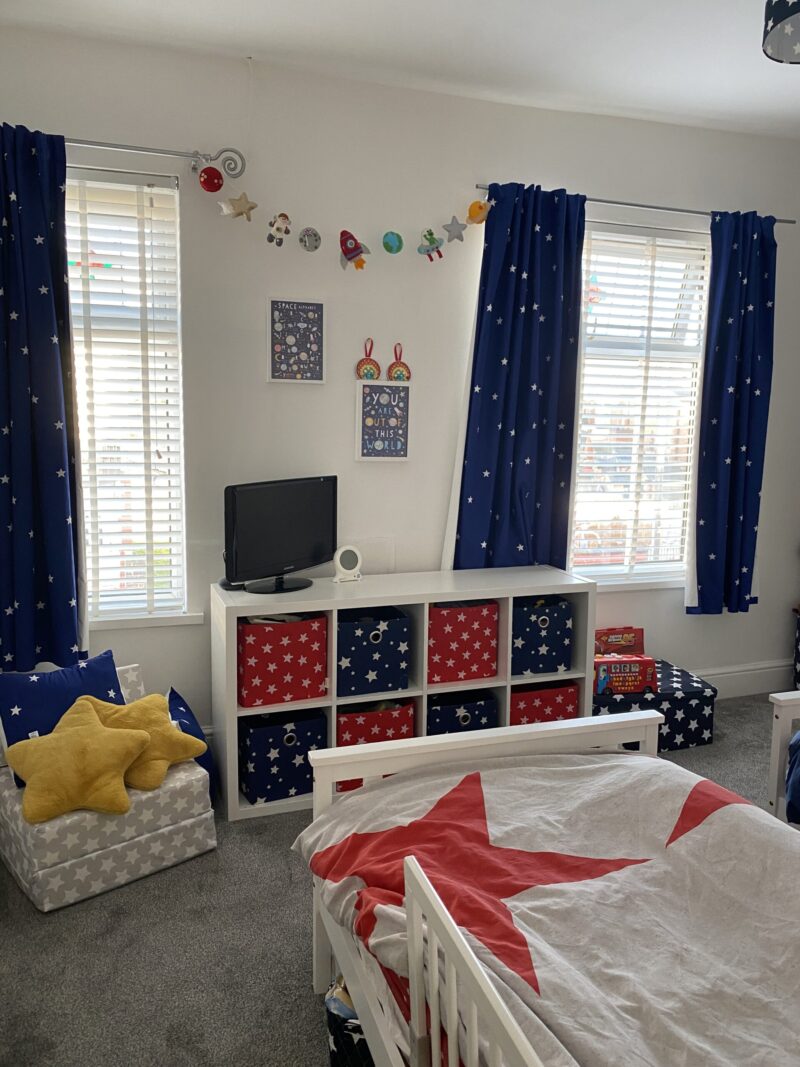
Just because a room is being shared doesn’t mean it can’t provide personal space to everyone inside it. You might clearly mark out areas of the room for the use of one particular sibling. This can be done with the help of physical objects, including bookshelves and other items of furniture.
Children might be encouraged to decorate their own particular areas of the room, so that it’s clear which space belongs to which child. This can help the room feel personal to both children.
Maximise Space with Smart Furniture Choices
When space is limited, it’s important to pick out furniture that can serve many functions, and that can make the best possible use of vertical space. A bunk bed for kids is a natural way of doing this, but you might also convert the lower part of a bunk bed into a desk, a reading nook, or a gaming station.
Storage furniture, like Ottoman beds and chests of drawers, can be hugely helpful, too. As well as providing the space to store things, however, you’ll also need to get the room’s occupants into the habit of actually using the storage.
Implement Consistent Routines and Rules
Getting children to settle down at night is essential. But that doesn’t make it easy. And the difficulty is often compounded when two children are in the same room.
Make sure that you establish clear rules, and stick with them. Keep the bedtime routine consistent, and forbid all screen time during the lead-up to sleep.
Prioritise Safety in Shared Spaces
If you’re used to bunk beds, it’s worth abiding by a few basic safety guidelines. To begin with, the top bunk isn’t suitable for very young children. You’ll also need to install guardrails, especially if the occupant is in the habit of rolling over while asleep.
Regular checks on the furniture and fixtures will ensure that damage can be repaired quickly. Make sure, above all, that heavy furniture is secured to the walls. A bookshelf might easily be climbed on when children are unsupervised.
Encourage Open Communication and Flexibility
It’s important that your plans aren’t too rigid and restrictive. If you can get kids to cooperate in the drafting of the rules, you might reduce the likelihood of a conflict later on. If it feels like a given approach isn’t working, then encourage your kids to speak up and change things. As they grow up, their needs will almost certainly change – and your approach will often need to change accordingly.
Discover more from Hello MrsShilts
Subscribe to get the latest posts sent to your email.