To lots of us, art is everything. It takes many forms, from the visually creative to the world of audiovisual expression. Participating in art has profound benefits to the mind and soul, which is why it can be so great to dedicate space to it at home. And there’s no better place to set up a home art studio than in a garage that’s empty or flush with unused space.
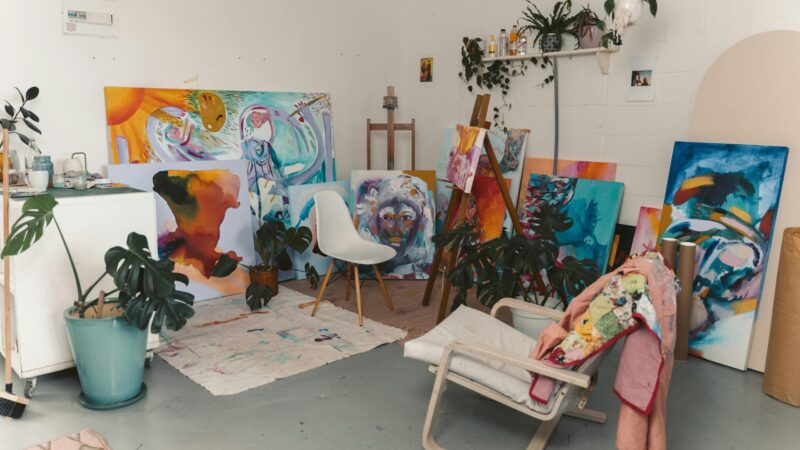
A garage art studio is ideal, as the space is already utilitarian and resilient, without as many items, like furniture or decor, that need to be protected from paint or other artistic materials.
How can I convert my garage into a functional art studio?
You shouldn’t just fill an empty garage space with all your art supplies and get to work. You could, but you’re not setting yourself up for sustained success. Things like ventilation, proper lighting, upgraded floors and temperature control, among other things, will be core facets of a successful home art studio garage hybrid.
Proper ventilation is essential for a home studio
Working with oils, solvents, spray fixatives and other art materials can be dangerous without proper ventilation. It’s not enough to simply ‘open a door’ to let some air in. You need to ensure the space is set up for respiratory safety.
- Incorporate some extractor fans near windows to pull air away from your face and out of the building.
- Install a push-pull system that uses a fan to bring fresh air while exhausting dangerous fumes.
- Air purifiers with HEPA and Carbon filters can help reduce odours by catching fine pigment dust.
Controlling the temperature and moisture is vital
A DIY garage art studio can be the site for a rollercoaster of temperatures, which can have an impact on the quality of your art projects. That’s why it’s important to control temperature and moisture levels in the space.
- Garage doors and walls should be well insulated, with proper cores or rigid foam boards, etc.
- Bare concrete floors are cold and hard on the joints. Interlocking rubber or PVC tiles are perfect for cushioning during long-standing art sessions.
- A small dehumidifier can be used to ensure paints dry more efficiently, without any paper or canvas rippling.
A good lighting strategy is critical for a home art studio
You can’t produce your best work relying on standard garage lighting alone. It will distort your colours, resulting in pieces that don’t realise your vision. You need to provide a mix of natural and full-spectrum artificial light.
- Install north-facing windows for consistent natural lighting that doesn’t produce harsh moving shadows.
- Buy LEDs with a colour rendering index (CRI) of 95+ to ensure colours look the same consistently.
- Aim for lights with 5000K to 5500K in Kelvin Temperature for a closer to natural experience.
- Make sure there’s plenty of task lighting in the form of floor lamps and desk lighting.
Make sure there’s plenty of bespoke art storage
You need some sufficient storage pieces to help maintain your creative flow, organised by frequency of use.
- ‘Toast racks’ use simple timber dividers to store finished works and blank canvases vertically, so they don’t stick together.
- Architectural plan chests are the gold standard for keeping work flat and dust-free.
- Mobile carts with tiers are essential, as they allow you to move active paints and brushes across the garage for easy access.
By following these guidelines for safety and utility, you should be well on your way to building the home art studio that you’ve been dreaming of in your garage. Make that tired old concrete space into something beautiful!
Discover more from Hello MrsShilts
Subscribe to get the latest posts sent to your email.