The modern workplace is evolving beyond traditional beige walls and sterile environments, with forward-thinking companies recognizing that colour psychology plays a crucial role in employee performance and well-being. Research from leading universities has consistently demonstrated that strategic colour choices can boost productivity by significant margins, with some studies showing improvements of up to 30% when the right hues are implemented thoughtfully throughout office spaces.
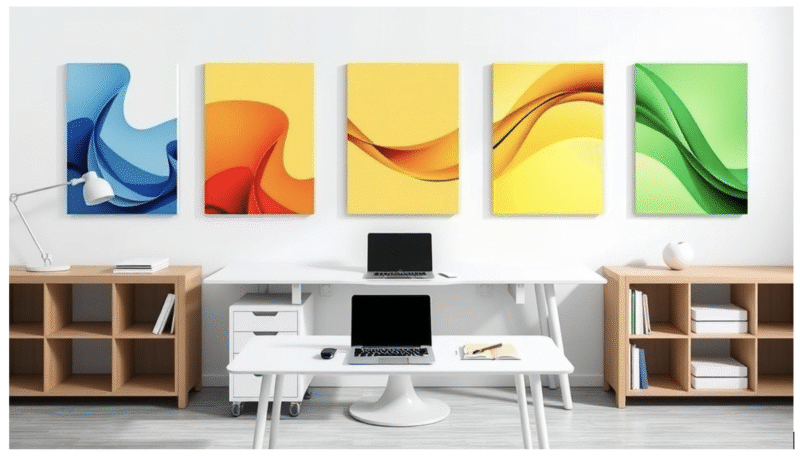
Implementing these colour psychology principles doesn’t require expensive renovations or complete office overhauls. Simple additions like strategically placed canvas art prints in productivity-enhancing colours can transform workspace atmospheres while remaining budget-friendly and easily adaptable to changing needs. This accessibility makes colour psychology an increasingly attractive option for businesses of all sizes looking to optimize their work environments.
The psychological impact of colour on workplace performance
Colour psychology operates on the fundamental principle that different hues trigger distinct emotional and cognitive responses in the human brain. When employees are surrounded by carefully chosen colours, their mood, focus levels, and creative thinking can be significantly enhanced. The University of Texas conducted groundbreaking research in 2015 that revealed blue hues in office environments can boost productivity by approximately 10% by creating calm atmospheres that promote concentration and problem-solving abilities.
Blue tones work particularly well in areas where deep focus and analytical thinking are required, as they help reduce stress and mental fatigue while encouraging sustained attention. This makes blue an ideal choice for individual workstations, quiet zones, and spaces dedicated to detailed tasks. The calming effect of blue also helps employees maintain composure during challenging projects and high-pressure situations.
Green represents another powerful colour for workplace productivity, offering psychological benefits related to balance and harmony. This colour helps reduce eye strain, particularly important in our screen-heavy work culture, while promoting a sense of stability and well-being among team members. Green works exceptionally well in spaces where employees spend extended periods, as it creates a refreshing environment that combats mental exhaustion.
The neurological basis for these colour effects stems from how our brains process visual information and translate it into emotional and physiological responses. When specific wavelengths of light enter our visual system, they trigger cascading effects throughout the nervous system, influencing everything from hormone production to cognitive processing speed. This scientific foundation explains why colour psychology studies consistently demonstrate measurable improvements in workplace performance when strategic colour choices are implemented.
Energizing collaborative spaces through strategic colour choices
While calming colours excel in focus-oriented areas, collaborative spaces benefit from more energizing hues that stimulate creativity and enthusiasm. Yellow stands out as particularly effective for brainstorming rooms, meeting areas, and social spaces within the office. This vibrant colour naturally increases energy levels and promotes optimistic thinking, making it easier for teams to generate innovative ideas and maintain engagement during group activities.
The key to successful implementation lies in understanding that different work zones require different colour strategies. Modern office designs are increasingly incorporating dynamic colour schemes that align with specific functions, creating environments where each area supports its intended purpose. This zoned approach allows companies to maximize the benefits of colour psychology while avoiding the overstimulation that can occur when energizing colours are used inappropriately.
Real-world applications have demonstrated remarkable results when these principles are properly executed. Design firm HOK reported a 15% increase in productivity after implementing strategic colour choices throughout their workspace, while tech startup FreshBooks achieved an even more impressive 20% improvement. These case studies highlight the tangible business benefits that can result from thoughtful colour implementation.
Cultural considerations also play an important role in colour selection, as different backgrounds and experiences can influence how individuals respond to specific hues. Organizations with diverse workforces must consider these variations when developing their colour strategies, ensuring that chosen palettes resonate positively across different cultural perspectives while maintaining their intended psychological effects.
Practical implementation strategies for maximum impact
Successfully applying colour psychology in workspace design requires a balanced approach that considers both the science behind colour effects and the practical needs of the organization. The most effective strategies involve creating subtle colour influences rather than overwhelming environments with bold, saturated hues. Soft, muted versions of productivity-enhancing colours often work better than their more intense counterparts, providing psychological benefits without causing distraction.
Corporations are increasingly recognizing colour psychology as a strategic tool for improving employee performance and morale, with many companies now incorporating these principles into their standard office design protocols. The growing trend involves combining colour psychology insights with performance management systems to continuously track and enhance workplace effectiveness, creating data-driven approaches to environmental optimization.
The flexibility of colour implementation through artwork, accent walls, and decorative elements makes it possible for businesses to experiment with different approaches and adjust their strategies based on employee feedback and performance metrics. This adaptability ensures that colour psychology applications can evolve alongside changing business needs and workforce preferences, making it a sustainable long-term investment in employee productivity and satisfaction.
Lighting conditions significantly impact how colours appear and affect occupants, making it essential to consider both natural and artificial illumination when planning colour schemes. The same colour can produce dramatically different psychological effects under various lighting conditions, emphasizing the importance of testing colour choices throughout different times of day and seasons to ensure consistent benefits.
Discover more from Hello MrsShilts
Subscribe to get the latest posts sent to your email.