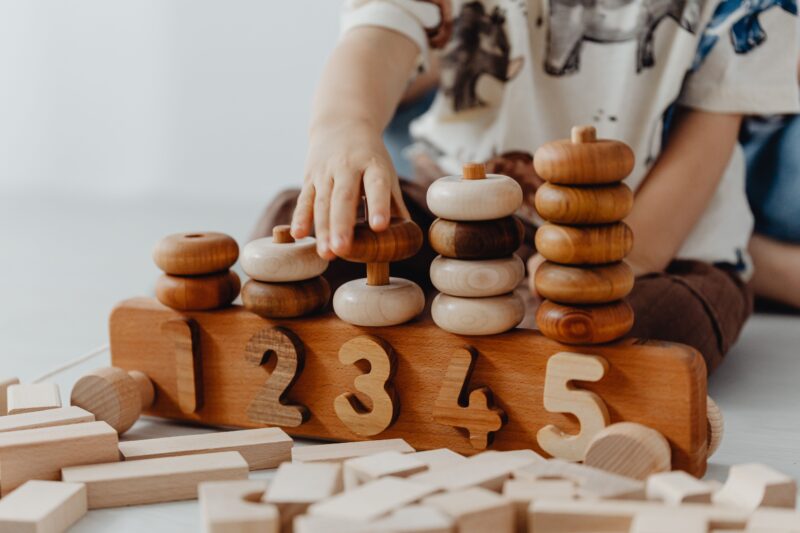
In today’s fast-paced world, the importance of fostering lifelong learning cannot be overstated. As technologies advance and industries evolve, individuals must continuously adapt to remain relevant. One of the most effective ways to cultivate this adaptability from a young age is through open-ended play. This form of play, characterised by its lack of predefined outcomes, not only encourages creativity and imagination but also lays the foundation for continuous learning throughout life.

The Magic of Open-Ended Play
Open-ended play refers to activities that do not have a specific goal or ending point. This type of play offers children the freedom to explore, experiment, and create without the constraints of a rigid structure. Whether building a tower, constructing a LEGO motorbike, or creating an imaginary world, children engage in play that allows them to make their own decisions and solve problems independently. This freedom fuels creativity and hones critical thinking skills, both crucial components of lifelong learning.
When children partake in open-ended play, they are not just passing the time; they are immersing themselves in a process of discovery and innovation. They develop the ability to think differently, to view problems from multiple angles, and to devise solutions that may not be immediately obvious. This problem-solving mindset is essential not only in educational settings but also in real-world scenarios, where challenges often require out-of-the-box thinking.
Building Independence and Confidence
Open-ended play is instrumental in fostering independence and confidence in children. As they make choices and witness the outcomes, they learn to trust their judgment and become more self-reliant. These experiences contribute to a growing sense of competence and autonomy, which is vital for embracing lifelong learning.
Children who engage in open-ended play often exhibit greater initiative and are more willing to take risks. These qualities are invaluable in a world where change is the only constant. Adults who have developed these traits tend to better navigate career changes, adapt to new technologies, and seek out learning opportunities in various forms.
Moreover, the confidence gained through open-ended play helps individuals approach challenges with a positive attitude, knowing that failure is merely a part of the learning process. This resilience is crucial in maintaining a lifelong commitment to learning.
Encouraging Collaboration and Communication
Open-ended play not only impacts individual growth but also acts as a catalyst for social development. As children play together, they learn to collaborate, negotiate, and communicate their ideas effectively. These interactions teach valuable lessons in empathy, listening, and understanding diverse perspectives—skills that are indispensable in a collaborative work environment.
Adults who have honed these communication and collaboration skills during their formative years are often more successful in team-based settings. They are better equipped to work across cultures and disciplines, fostering innovation and achieving common goals. In this way, open-ended play serves as a precursor to lifelong learning in communal and professional contexts.
Laying the Groundwork for STEM Learning
A significant advantage of open-ended play is its ability to naturally integrate principles of Science, Technology, Engineering, and Mathematics (STEM). Through activities like building structures with blocks or designing intricate contraptions, children learn about spatial awareness, patterns, geometrical relationships, and cause-and-effect principles.
These foundational STEM skills, acquired through play, prepare children for more formal education in these fields. As they grow, they can seamlessly transition from play-based learning to structured learning, retaining their curiosity and enthusiasm for discovery. This continuous thread of exploration, from open-ended play to complex problem-solving, ensures that learning is perceived as an engaging and dynamic process rather than a mundane task.
Creating Lifelong Learners
In fostering a mindset of exploration, resilience, and collaboration, open-ended play sets the stage for lifelong learning. It encourages individuals to remain inquisitive, open to new ideas, and eager to expand their horizons.
In a rapidly changing global landscape, where the ability to learn and adapt is crucial, cultivating these traits from an early age becomes paramount. By providing opportunities for open-ended play, parents and educators can instill a love of learning that persists throughout life, ensuring that each child is equipped to thrive in an ever-evolving world.
Encouraging open-ended play is a simple yet profoundly effective way to lay the groundwork for lifelong learning. In a future where continuous development and adaptability are key, its value cannot be underestimated.
Discover more from Hello MrsShilts
Subscribe to get the latest posts sent to your email.